Grand Theft Auto: San Andreas
v2.11.311

Download APK Safe - Fast - Free!

Into the Dead by PIKPOK revolutionizes the mobile landscape by fusing endless runner mechanics with intense first-person survival horror. To face the relentless autoscrolling horde and wield devastating weaponry like the Minigun or Chainsaw, you need the latest Into the Dead apk on your device. Navigate the zero-visibility Cornfield biome and dodge the undead in this high-stakes arcade experience. For a secure, high-speed installation that guarantees safe performance, choose GB Plus Apps for your Into the Dead download today.
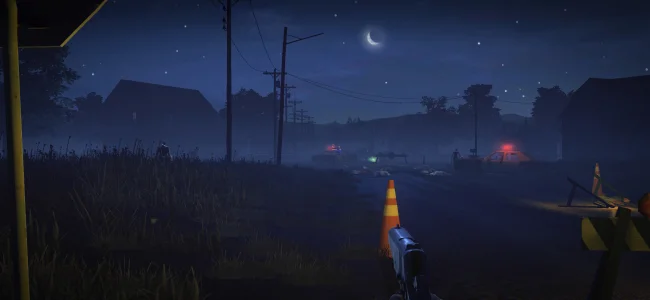
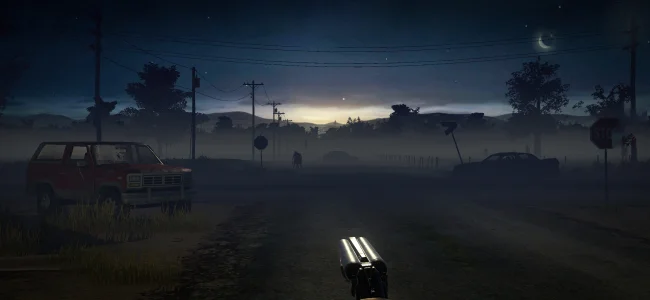
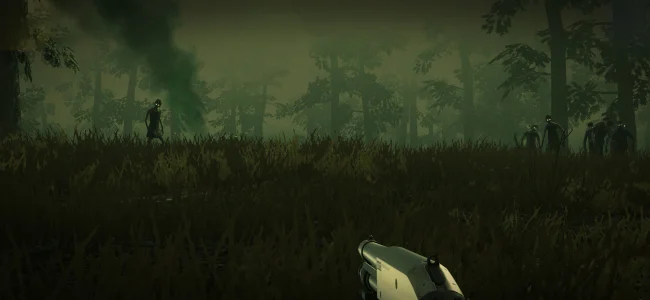
The mobile gaming landscape was permanently altered by the release of Into the Dead, a title that successfully hybridized the addictive mechanics of an endless runner with the high-stakes tension of a first-person shooter. Developed by the New Zealand-based studio PIKPOK (formerly Sidhe Interactive), this game transcends the typical casual arcade loop by introducing deep atmospheric immersion and a relentless survival paradigm. Built on the Unity Engine, the game utilizes a clever rendering pipeline that relies on heavy atmospheric fog and silhouette-based visuals. This is not merely an aesthetic choice to induce horror; it is a technical optimization that reduces draw distance, allowing the Into the Dead apk to maintain high frame rates even on legacy Android hardware while masking the procedural spawning logic of the terrain.
Unlike its sequel which moved toward a narrative-heavy campaign, the original title retains a purity of design focused on high-score endurance. Users frequently seek out the Into the Dead apk to experience this specific, unadulterated arcade loop where the primary objective is simply to survive as long as possible against an ever-thickening horde. By stripping away complex navigation and focusing on lateral movement and threat prioritization, PIKPOK created a distinct "autoscrolling survival" sub-genre that remains a benchmark for mobile technical architecture and gameplay design.
The core gameplay of Into the Dead is defined by a restriction of player agency that paradoxically increases tension. The player is forced into a constant state of auto-run, with control limited to strafing (left and right) and weapon discharge. This shifts the cognitive load from navigation to pure reaction time. The loop consists of infiltration into a generated biome, obstacle avoidance, and resource expenditure. Ammunition is scarce, turning every trigger pull into a strategic decision rather than a primary mode of engagement. If a player collides with a zombie without a defense perk, the run terminates immediately.
The title is technically an Into the Dead free to play experience, though it employs an economy that balances skill against grinding. The game offers multiple distinct modes that alter the victory conditions and required strategies:
Control schemes are versatile, offering Tilt to Steer (accelerometer), Touch to Steer (digital input), and gamepad support. High-level players often prefer digital touch inputs for "snappy" direction changes that allow them to thread the needle between hitboxes.
The atmospheric depth of Into the Dead is achieved through high-contrast lighting and a specific color palette that emphasizes gloom. The graphical fidelity relies on distinct entity definitions that function as both visual set pieces and gameplay obstacles. The environment is procedurally generated, ensuring no two runs are identical, yet it follows a structured progression of biomes.
Players typically start in The Field, an open grassland with high visibility where threats are easily spotted. Progression leads to The Cornfield, a dense vegetation biome that represents a significant difficulty spike. Here, visibility is reduced to near zero, and corn stalks obscure zombies until they are within striking distance, forcing reliance on audio cues. Later stages introduce The Forest, which adds static collision objects (trees) that can kill the player on impact, requiring distinct pathfinding logic compared to dynamic zombie obstacles.
From a technical perspective, the visual assets are stored in an OBB (Opaque Binary Blob) expansion file. A common issue during installation is the "White Screen" glitch, which occurs if the OBB file is missing or misplaced in the directory Android/obb/com.sidheinteractive.sif.DR/. Without this file, the Unity engine loads the geometry but fails to apply textures, rendering the world as a void.
Progression in Into the Dead is managed through the "Armory," a meta-hub where players unlock and upgrade weapons using Coins. Unlike the card-based system of the sequel, this game uses a direct purchase model. The weapons are distinct entities with unique attributes affecting spread, range, and reload speed.
The arsenal is categorized by utility:
Players progress by completing "Mission Sets" (e.g., "Kill 5 zombies with the Chainsaw"). Completing these sets increases the player's Rank, which in turn unlocks new weapons for purchase and applies coin multipliers.
The in-game economy relies on a dual-currency structure, primarily driven by Gold Coins. These are earned through gameplay based on distance traveled and kills. While the game is accessible as an Into the Dead free title, the grind for high-tier weaponry like the Minigun or the Grenade Launcher can be substantial. This economic friction has led to a robust demand for the Into the Dead mod version of the application.
Technically, the game stores currency values as integers within the application's memory. The Into the Dead mod community often manipulates these values to provide "Unlimited Coins" or "God Mode" (disabling collision triggers). However, a common technical failure in amateur mods is the integer overflow glitch; if a modder sets the coin value higher than the 32-bit signed integer limit (2,147,483,647), the value wraps around to a negative number, soft-locking the player's purchasing power.
Furthermore, because the game utilizes standard Android signature verification, a modded APK cannot be installed as an update over an official version due to signature mismatch. Users must uninstall the legitimate version first. For the most stable and secure experience, it is highly recommended to stick to the official Into the Dead download from the Google Play Store or verified partners. This ensures compatibility with modern Android OS versions (Nougat 7.0+) and prevents the "Black Screen" issues associated with improper OBB file management common in modified installations.
Into the Dead redefines the endless runner genre by stripping away the safety of arcade mechanics and replacing them with high-stakes survival horror. Unlike traditional shooters where you control forward momentum, this title forces you into a relentless auto-run state. Your primary objective is not to win, but to delay the inevitable: survive as long as possible by navigating through a procedurally generated field of Zombies and static obstacles like trees and fences.
Upon completing your Into the Dead download, understanding the input nuances is critical for survival. The game offers multiple control schemes to suit different playstyles, which can be adjusted in the Settings menu:
While the core loop remains consistent, Into the Dead offers four distinct game modes that alter the winning conditions and required strategies. To master the game, you must adapt your loadout and playstyle for each specific mode.
This is the standard survival experience. The metric for success is Distance (Meters). In this mode, aggression is often a trap. The optimal strategy is evasion; use your weapons only as defensive tools to clear a blocked path. Conservation of ammo is paramount, as supply crates can be affected by RNG (Random Number Generation).
Massacre shifts the focus from distance to violence. The victory condition is the total Kill Count. Here, the spawn rate of supply crates is increased to fuel your aggression. Weapons with high spread or rapid fire rates, such as the M300 Combat Shotgun or the Minigun, are top-tier choices. Players seeking an Into the Dead apk often look for specific versions that optimize this mode's performance on older devices due to the high number of on-screen entities.
This mode is a difficulty modifier applied to the standard loop. It features increased Zombie density, faster movement speeds, and significantly reduced ammo spawns. One mistake results in instant termination unless a "Second Chance" perk is active. This mode tests your ability to exploit "Hitbox Porn"—finding the tiniest gaps between enemies to squeeze through without firing a shot.
Perhaps the most atmospheric mode, this drops the player into a night operation with no weapons. You are equipped only with a Flashlight. The battery drains over time, reducing your visibility cone. Lightning flashes provide momentary glimpses of the horde. Success here relies entirely on memorizing enemy patterns and reacting to the glowing eyes of Zombies in the dark.
Progression in Into the Dead is gated by a Mission and Rank system rather than a narrative campaign. Players must complete sets of three objectives (e.g., "Kill 5 Zombies with the Chainsaw") to increase their Rank. Ranking up unlocks new weapons in the Armory, which must then be purchased with currency.
Managing resources is the biggest challenge for a Into the Dead free player. Coins are scarce in the early game, and wasting them on temporary perks can halt your long-term progression. Below is a breakdown of the game's economic entities:
| Currency Entity | Acquisition Method | Strategic Best Use |
|---|---|---|
| Coins (Gold) | Earned via distance traveled, zombies killed, and completing Mission Sets. | Prioritize permanently unlocking weapons in the Armory and upgrading weapon attributes like Clip Size. Avoid spending on single-run perks early on. |
| Real Money (IAP) | Direct purchase via store. | Used to buy premium weapon packs like the Grenade Launcher or Minigun to bypass the grind. |
| Ads (Rewarded Video) | Voluntary opt-in after a run or death. | Watch to activate a Second Chance (revive) during a high-score run or to double coin payouts. |
The "Meta" of Into the Dead revolves around weapon tier lists and synergy with the environment. Unlike traditional shooters where precision is key, this game favors "Suppression" and "Crowd Control."
The Pistol and Revolver are considered low-tier because they require precise aiming in a game where you are constantly moving. Conversely, the Shotgun and M300 Combat Shotgun are S-Tier weapons because their spread shot can clear a wide wedge of enemies, creating a safe lane for travel. The Chainsaw is a unique entity that provides a continuous kill zone in front of the player, essential for dense crowds.
Advanced players also utilize specific movement tech. The "Chainsaw Jump" is a high-level maneuver where the player kills a Zombie mid-air while vaulting a fence. This is often a requirement for specific high-rank missions.
It is worth noting that the community has a segment dedicated to the Into the Dead mod scene. These modified versions often alter the game's difficulty by enabling "God Mode" (disabling collision death) or "Unlimited Ammo." While these mods remove the survival tension, they transform the game into a pure power fantasy, allowing players to test weapons like the Cartel Twins without fear of resource depletion. However, relying on these mods prevents you from learning the essential evasion skills required for legitimate high-score runs.
Android/obb/com.sidheinteractive.sif.DR/ directory. A missing OBB file is the primary cause of the "White Screen" glitch at launch.