Bakso Simulator
v1.9.13

Download APK Safe - Fast - Free!
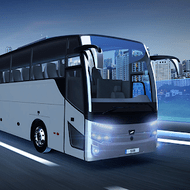
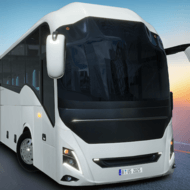
Experience the authentic thrill of Indonesian transportation with the latest Mobile Bus Simulator apk from LOCOS. This immersive casual simulator challenges you to master the viral Telolet horn mechanic while managing a fleet of buses fully customizable with unique Liveries and Strobe lights. Avoid technical errors and ensure a complete installation with the essential OBB file by trusting GB Plus Apps for your secure, high-speed Mobile Bus Simulator download today.
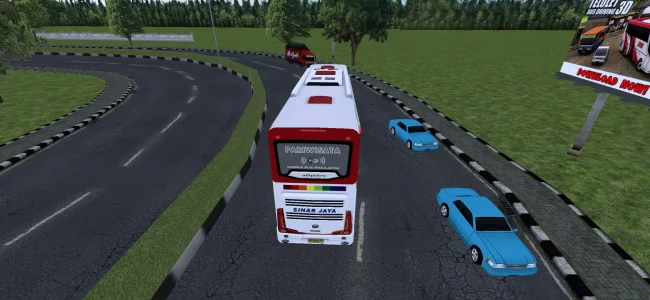
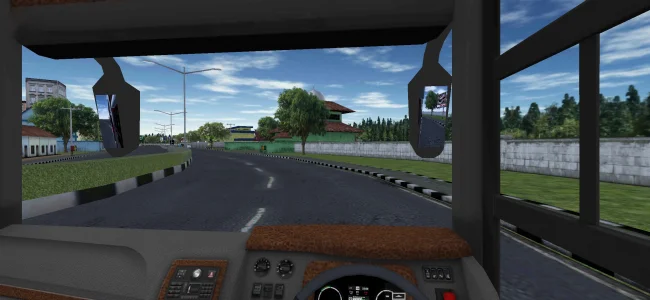
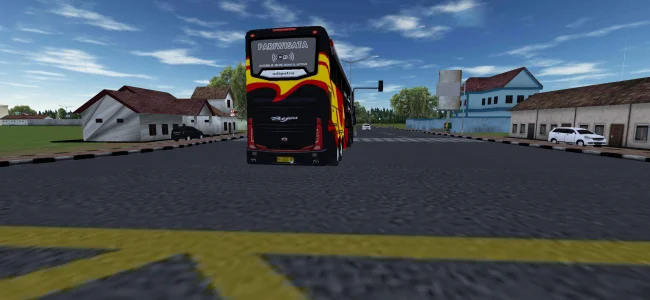
Mobile Bus Simulator stands as a seminal title in the Android vehicle simulation sector, carving out a distinct niche that diverges from the sterile realism of Western counterparts. Developed and published by LOCOS (also known as LOCOS Creative), this title prioritizes the culturally vibrant atmosphere of Indonesian roadways over rigid technical simulation. Unlike games that punish every minor driving infraction, Mobile Bus Simulator offers a "Casual Simulator" experience. It leans heavily into the "Independent Operator" progression fantasy, allowing players to manage everything from driving physics to fleet expansion without the grueling punishment of hardcore physics engines.
The game’s enduring popularity, with estimates between 50 and 100 million installs, is anchored in its technical accessibility. Operating under the package name com.Locos.MBS, the Mobile Bus Simulator apk is engineered to function on the "fat middle" of Android hardware. It supports legacy devices and requires a relatively small storage footprint compared to Unreal Engine competitors. This accessibility ensures that the game remains a staple in emerging markets, providing a robust simulation experience that does not demand flagship hardware. The core appeal lies in its specific cultural markers, most notably the "Om Telolet Om" phenomenon—a gameplay mechanic where drivers interact with children on the roadside using rhythmic horn patterns to trigger joy and rewards.
The core loop of Mobile Bus Simulator is a satisfying cycle of preparation, navigation, and economic reinvestment. The experience is grounded in a rigorous "Earn-Upgrade-Expand" structure that transforms the player from a simple driver into a fleet tycoon. The gameplay is segmented into distinct operational phases, starting at a Terminal (such as Jakarta or Semarang) where the player must physically manage the boarding process.
The game features several distinct content types designed to cater to different playstyles:
Is Mobile Bus Simulator free to play? The title adheres to a standard Freemium model. While the base game and all maps are accessible without payment, the economy is tuned to incentivize consistent play. The "Telolet" mechanic is not just audio flair; it is a revenue source. As players drive, they encounter clusters of children. Successfully timing the horn interaction triggers a happy animation and awards a "Telolet Bonus," effectively gamifying the journey and breaking the monotony of highway driving.
Built on the Unity 3D engine, the game utilizes an art style that balances performance with visual customization. The visual identity of Mobile Bus Simulator is defined by its deep "Livery" system (or Skins). The community places immense value on visual ownership, allowing players to import custom textures to alter the external paint scheme of their bus. This transforms the vehicle into a personal canvas, supporting the massive user-generated content ecosystem that extends the game's lifecycle.
The atmospheric immersion is heightened by specific environmental entities found in the research. The AI traffic is not merely generic cars; it includes culturally specific vehicles like the Tahu Bulat (Round Tofu) truck—a pickup with a loudspeaker—and the Stut Jack (chili delivery truck), known for high-speed weaving. Furthermore, the visual progression is tied to "Night Mode" aesthetics. Players invest heavily in Strobe Lights (Strobo) and Velgs (custom rims). While these elements do not alter driving physics, installing a complex strobe system changes the visual experience of night driving, mimicking the real-world "Night Bus" culture prevalent in Southeast Asia.
Progression in Mobile Bus Simulator is purely economic and visual; there are no RPG-style driver stats. The "Meta" revolves around Revenue Maximization. The primary currency, RP (Rupiah), is earned through fares and performance bonuses. The ultimate goal for most players is to move away from the starter bus and unlock high-tier chassis configurations.
The progression hierarchy is strict:
Strategic players quickly realize that route efficiency is key. The meta favors selecting routes that balance distance with Gas Station availability to avoid the costly "Out of Gas" failure state. Furthermore, upgrading to a vehicle with higher capacity is mathematically more efficient than upgrading engine speed, as revenue is derived from passenger volume, not arrival time.
The in-game economy operates on a single soft currency (RP), avoiding the confusion of premium gems. However, the cost disparity between earning potential and the price of a Double Decker bus creates a significant "grind" friction. Revenue is generated through base fares, safety bonuses, and aggressive ad-watching multipliers. The game monetizes patience; players can either grind dozens of hours or purchase currency packs to bypass the wait.
This economic pressure is the primary driver for the popularity of the Mobile Bus Simulator mod scene. Players frequently search for modified versions to access "Unlimited Money" or "Unlocked All Buses" features. These mods typically manipulate the local save files to flip ownership flags for high-tier vehicles. However, users must be cautious. The game utilizes a split file architecture involving an APK and a heavy OBB (Opaque Binary Blob) file. A common technical failure is the "Black Screen" error, which occurs when the OBB file is missing or placed in the wrong directory (`Android/obb/com.Locos.MBS`).
For a stable experience that supports the developer and ensures cloud save functionality, the official Mobile Bus Simulator download from legitimate storefronts remains the safest option. It guarantees the correct installation of the OBB assets and ensures the Unity engine operates without the crashes often associated with signature-stripped modified versions.
Unlike standard Western driving games that prioritize silence and punctuality, Mobile Bus Simulator gamifies the chaotic energy of Southeast Asian roadways. To master the driving loop, players must understand the specific S-P-O (Subject-Predicate-Object) control logic designed for touchscreens. Whether you are playing a standard Mobile Bus Simulator download from the store or a sideloaded version, the interface remains consistent.
The primary control scheme offers three paradigms: Steering Wheel (Virtual), Buttons (Left/Right Arrows), and Tilt (Accelerometer). For precision driving in heavy traffic, the Steering Wheel option is recommended. The driving interface includes critical on-screen toggles:
Once you have secured the Mobile Bus Simulator apk and installed the necessary OBB files, the game presents a streamlined content structure focusing on career progression and vehicle ownership.
This is the primary economic engine of the game. Players start at a specific Terminal (e.g., Jakarta or Semarang) and select a destination. The difficulty is determined by distance and traffic density. The objective is to transport passengers from Point A to Point B while managing fuel consumption and "Safety" metrics. Violations such as running red lights or colliding with the Tahu Bulat (Tofu Truck) AI vehicles will deduct from your final payout.
The Garage serves as the secondary gameplay loop. Here, the focus shifts from driving to management and expression. Players can apply a Livery (Skin) to their bus, changing its external paint scheme. Advanced customization allows for the installation of Strobe Lights (Strobo) and custom Velgs (Rims). While these are largely cosmetic, upgrading lighting is functional for visibility during night cycles in the Mobile Bus Simulator free roam sections.
The economy in Mobile Bus Simulator relies on a single "Soft Currency" model, referred to as RP (Rupiah) or simply Money. Understanding how to maximize income is critical for moving from the starter bus to the high-tier Double Decker vehicles.
Below is a breakdown of the economy and resource management:
| Currency / Resource | How to Earn | Best Strategic Use |
|---|---|---|
| RP (Money) | Completing Routes, Telolet Bonuses, Safety Bonuses (No Crashes). | Saving for Super High Decker (SHD) or Double Decker (DD) buses to increase passenger capacity. |
| Ad Multiplier | Watching a video ad immediately after finishing a route. | Use ONLY on "Long Distance" trips. Using this on short trips is a waste of time relative to the payout. |
| Fuel | Purchased at Gas Station entities on the map using RP. | Refuel only when the tank is below 30% or before starting an "Inter-City" route to avoid running dry on highways. |
For a Mobile Bus Simulator free player, the progression can be slow. The most efficient path is to grind short, high-density routes to accumulate the safety bonus repeatedly, rather than risking long trips where a single crash can negate 20 minutes of driving revenue.
The current "Meta" (Most Effective Tactic Available) revolves around Passenger Capacity Maximization. In this simulation, revenue is directly tied to the number of heads on board. Therefore, vehicle speed is secondary to vehicle size.
Your primary goal should be to abandon the starter bus immediately. The upgrade path should be linear: Standard → SHD (Super High Decker) → DD (Double Decker). A Double Decker bus effectively doubles your revenue per minute of gameplay because it carries more passengers for the same fuel cost and driving time.
Due to the high cost of the top-tier buses, many players seek out a Mobile Bus Simulator mod. Intelligence reports indicate that "Unlimited Money" mods modify the local save file to remove the grind entirely. However, playing the legitimate version requires "Ad Optimization." The strategy is to complete the longest possible route and always tap the Double Reward button at the summary screen. This single action is mathematically more valuable than the driving itself.
To master the road and maximize your profits without needing cheats, follow these actionable tips: